Article About Atacama - CHILE
The Last Refuge of the Chilean Palm Tree
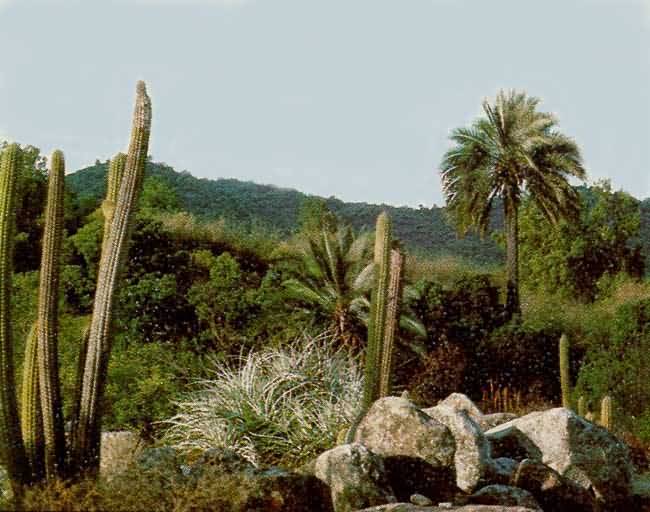
 Created in October 1967, the National Park ‘La Campana’ has a size of 8,000 hectares, belonging to the areas of Hijuelas and Olmué, 5th Region of Valparaíso. It is one of the most representative zones of the biological variety of the central zone of Chile, having been declared ‘Biosphere Reservoir’, by UNESCO, along with the Peñuelas Lake Forest Reservoir in 1984. Created in October 1967, the National Park ‘La Campana’ has a size of 8,000 hectares, belonging to the areas of Hijuelas and Olmué, 5th Region of Valparaíso. It is one of the most representative zones of the biological variety of the central zone of Chile, having been declared ‘Biosphere Reservoir’, by UNESCO, along with the Peñuelas Lake Forest Reservoir in 1984.
Among the most outstanding characteristics of this area, we have the fact that this is one of the two places where the Chilean palm tree – one which has the most southern distribution – is protected from exploitation, that caused it to be a ‘vulnerable’ species according to its conservation status.
This palm tree forest, or ‘kan kan’ as it was called by the ancient inhabitants of the area, is located in a place of the park called Ocoa. The trees can grow up to 30 meters and live a thousand years. In old times, it was widely present in the country; nevertheless, the overexploitation as producer of syrup and nuts caused a dramatic decrease in its number.
It is also important the presence in these latitudes of a Chilean species known to live far in the south: the oak. The forests of this species, located in the foothills of La Campana and El Roble, at 900 meters above the sea level, represent one more of the curiosities of this park.
The park fauna has chilla and culpeo foxes (they are seen sometimes), wildcats, and skunks. There is a great variety of rodents such as chinchillas, cururos and vizcachas, and among the birds, of course, the giant hummingbird (a world record), finches, crown sparrows, mockingbirds, turcas, tapaculos, eagles, and owls, among so many others.
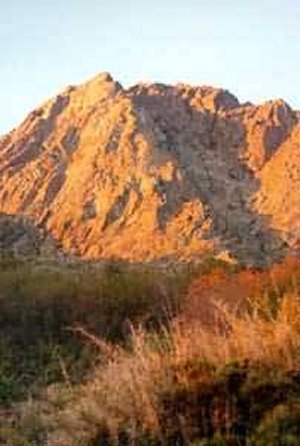
So much biological variety is framed and marked by a contradictory geography: heights as those we can find in hills as La Campana (1,828 meters above sea level), and El Roble (2,222 meters above sea level); deep abysses and smooth slopes in the valleys.
On the other side, in this same wild land, archeological evidences reveal ancient native presence in the zone. Evidences of this presence are related to old agricultural villages, besides cultural expressions as ‘tacitas’ stones, mortars, projectile heads, marai and pottery.
G. Salinas
webmaster@gotolatin.com
Back
|


 Home
Home 


 English


 Français
  Magyar
  اللغة العربية
  Ελληνας